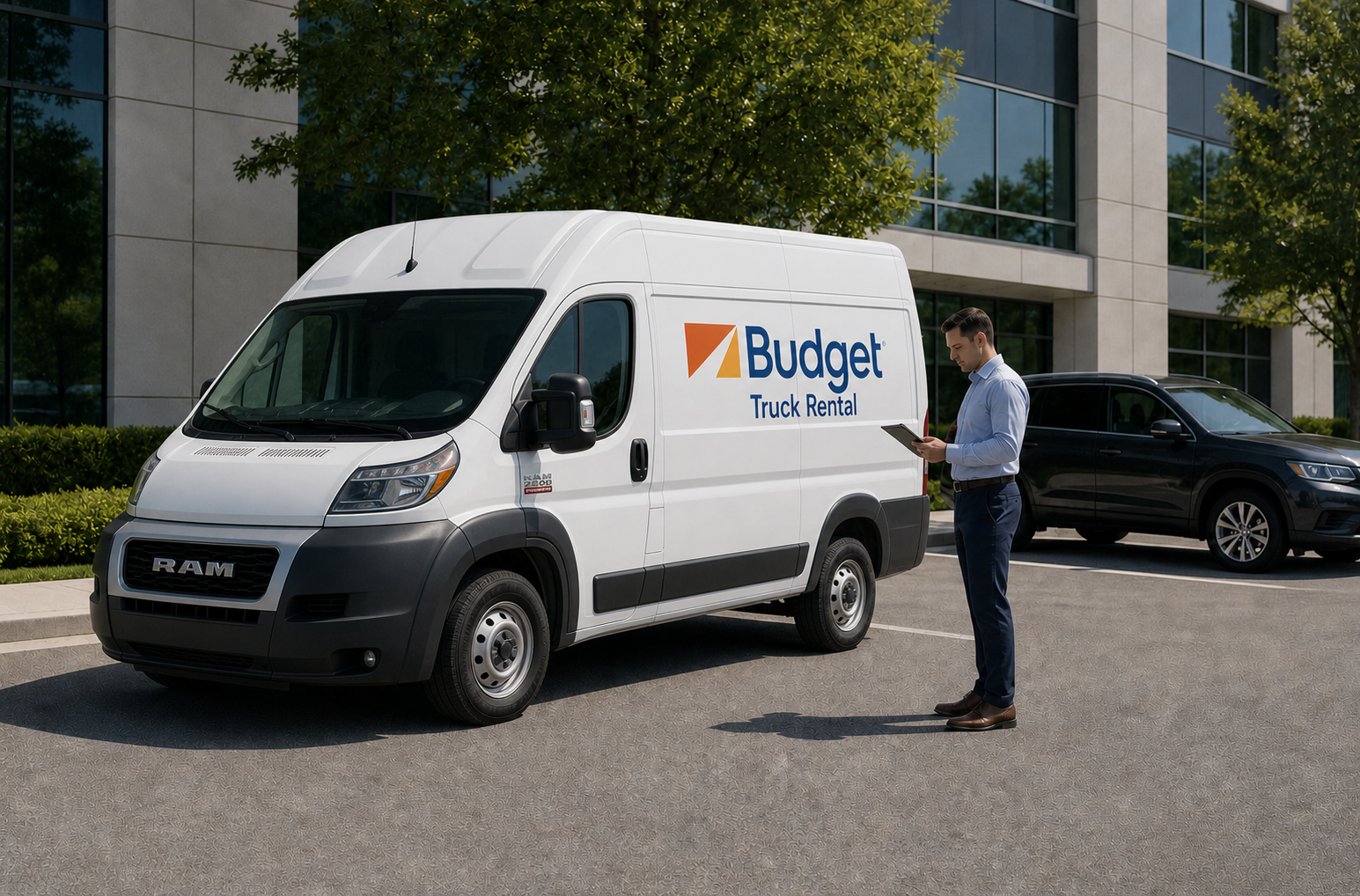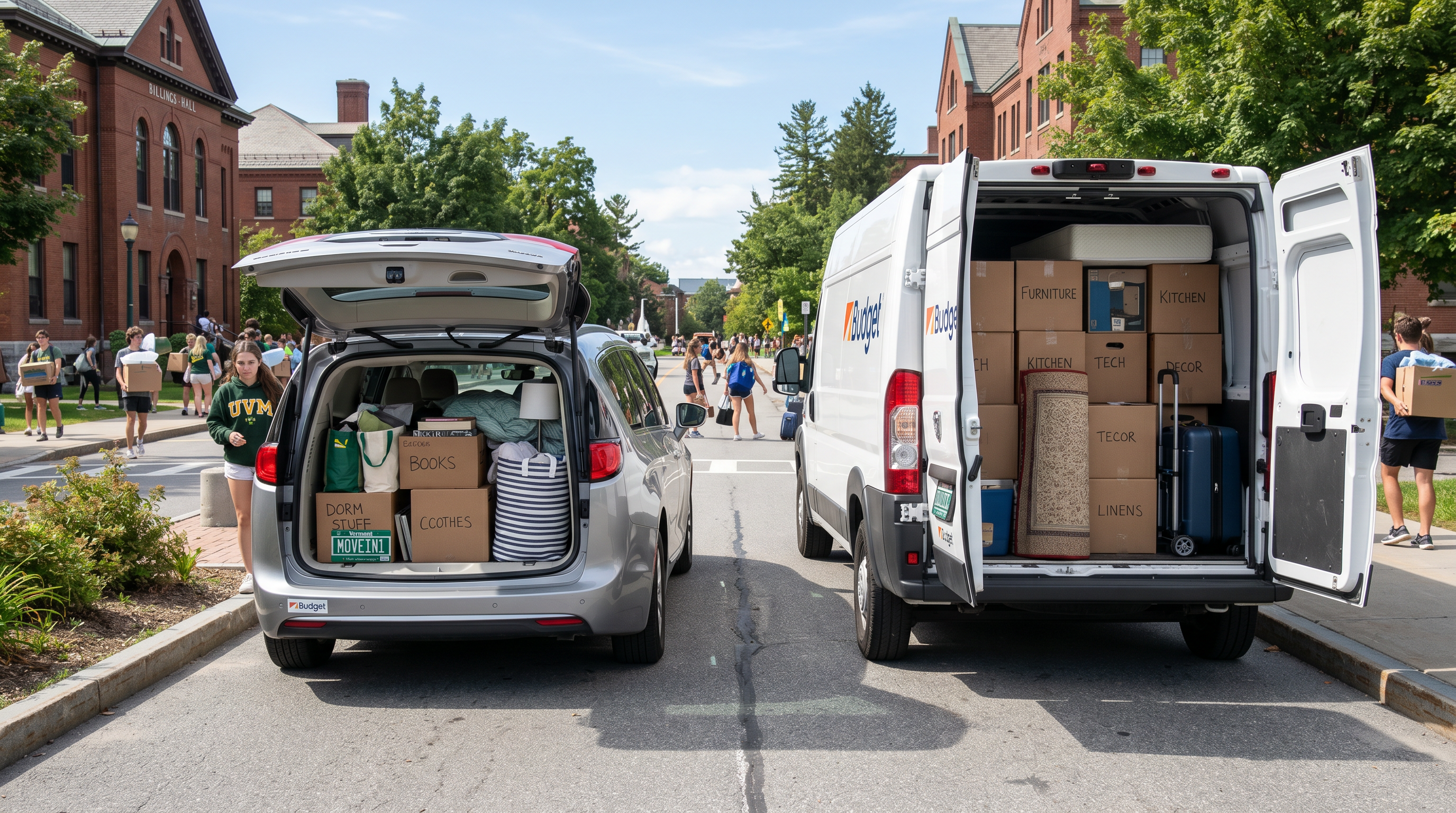
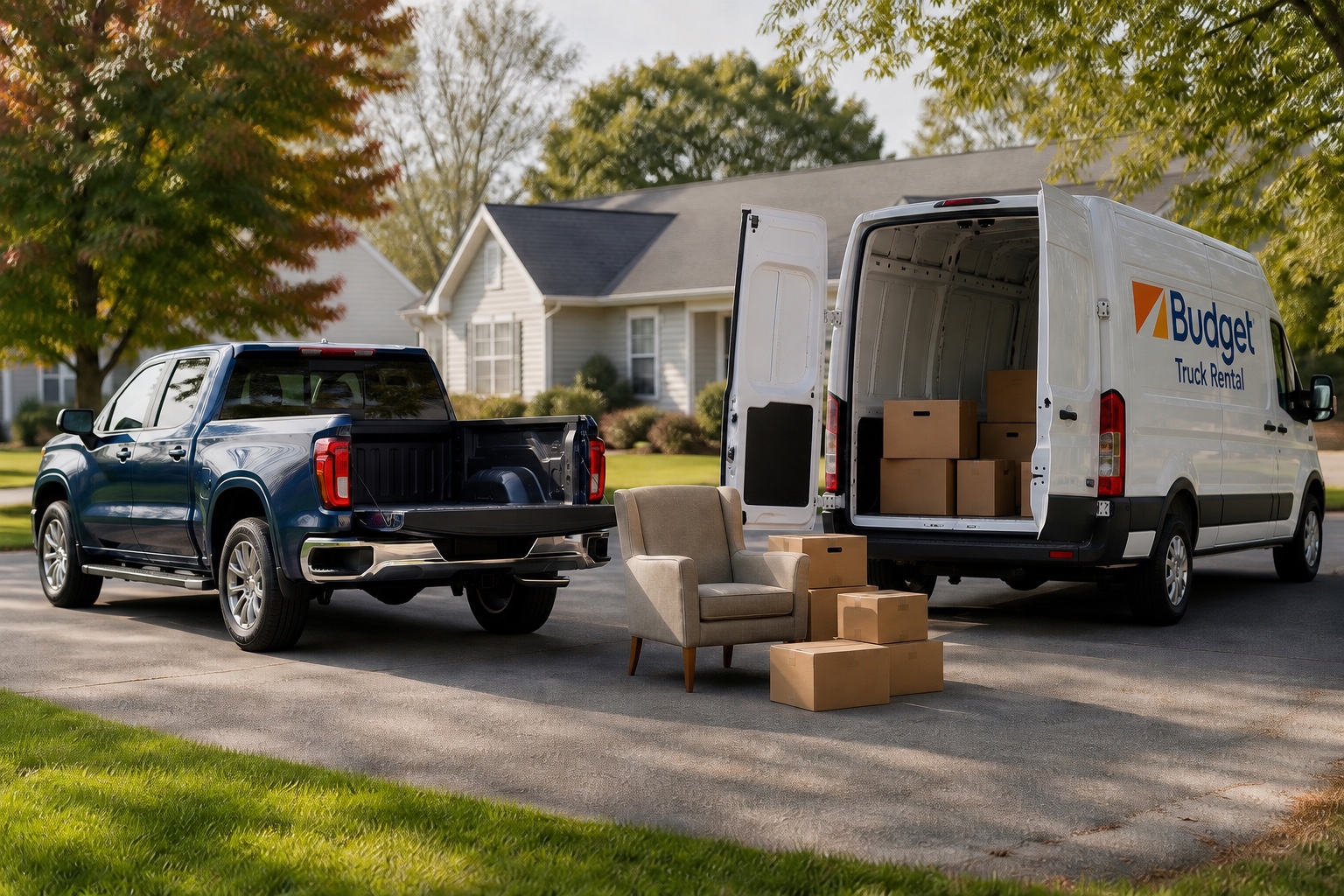
Quick answer: A pickup truck is often the better match for a few bulky, dirty or unusually shaped items that can be safely secured in an open bed. A cargo van is usually better for boxes, weather-sensitive belongings and loads that benefit from an enclosed, lockable space.
Neither vehicle wins every move. The right choice depends on the dimensions of your largest item, how much you are carrying, the weather, the route and how comfortable you are securing the load.
Pickup Truck vs. Cargo Van at a Glance
| Consideration | Pickup truck | Cargo van |
|---|---|---|
| Best fit | A few bulky or messy items | Boxes, furniture and organized loads |
| Weather protection | Requires a suitable cover | Enclosed cargo area |
| Loading access | Open bed from the sides and tailgate | Rear and, depending on the model, side-door access |
| Load security | Every item must be properly secured | Items still need securing inside the van |
| Parking | Familiar pickup footprint | Often manageable in regular lots, but usually taller |
Exact dimensions, payload, door openings and features vary by vehicle. Measure the load and confirm the available rental class before booking.
When a Pickup Truck Is the Better Choice
A pickup truck rental makes sense when the open bed solves a specific loading problem. You can approach the bed from multiple sides, lower the tailgate and carry items that may be awkward to place through a van door.
A pickup may be a good fit for:
- A single chair, table, dresser or boxed appliance
- Landscaping supplies and garden equipment
- Building materials for a home project
- Donation, recycling or disposal runs
- Items that are dirty and should not ride in an enclosed interior
The tradeoff is exposure. Rain, wind and road conditions can affect an open load, and every item needs appropriate securement. A tarp by itself is not a substitute for properly securing the cargo.
When a Cargo Van Is the Better Choice
A cargo van rental is usually the stronger choice when the load contains many boxes, smaller furniture or belongings that should stay enclosed during the trip.
A cargo van may work well for:
- Apartment, dorm and storage-unit moves
- Multiple boxes and household belongings
- Electronics, fabrics and other weather-sensitive items
- Retail inventory, event supplies or business equipment
- Routes with several stops where an enclosed load is helpful
The cargo area keeps everything together and out of casual view. You still need to distribute weight carefully and secure items so they cannot slide, tip or strike the doors while driving.
Which Is Better for Furniture and Boxes?
For one or two bulky furniture pieces on a clear day, a pickup can be simple and convenient. For furniture plus a collection of boxes, a cargo van often provides a more organized loading plan and better protection.
Start by measuring:
- The height, width and length of the largest item
- The narrowest doorway or opening it must pass through
- The floor space needed once items are arranged
- Whether the item can safely travel on its side
Do not assume a sofa, mattress or tall cabinet will fit based only on the vehicle name. Compare your measurements with the specific vehicle available at the rental location.
Which Is Easier to Drive and Park?
Both options generally feel more familiar than a larger box truck, but the route still matters. A pickup is wider than many cars and has a longer rear overhang. A cargo van may be taller and may have reduced rear visibility when the cargo area is full.
Before leaving the lot, take a moment to locate the mirrors, camera display, lights, fuel door and parking controls. Allow extra following distance, make wider turns when necessary and avoid garages or structures until you know the vehicle clearance.
For a first-time mover facing narrow apartment parking, either can be easier than a large moving truck. The cargo van usually has the advantage when the load must remain enclosed; the pickup has the advantage when quick open-bed access matters most.
Is a Pickup or Cargo Van Cheaper to Rent?
There is no universal winner. Rental rate, mileage terms, fuel use, taxes, optional products, availability and the number of trips can all affect the total.
A lower daily rate does not save money if the vehicle requires an extra trip. Compare the whole plan:
- Estimated rental time
- Expected mileage and fuel
- Tolls and parking
- Protective materials and load-securing equipment
- The possibility of needing a second trip
If neither vehicle can handle the load safely in one reasonable trip, compare a moving truck instead.
A Five-Minute Decision Checklist
- Choose the pickup when the load is limited, bulky, dirty or easier to place into an open bed.
- Choose the cargo van when you have many boxes or need enclosed protection.
- Choose a moving truck when the volume, height or number of large items exceeds both smaller options.
- Measure the largest items before reserving.
- Confirm dimensions, features, availability and permitted use with the rental location.
Frequently Asked Questions
Is a cargo van better than a pickup for an apartment move?
Often, yes—especially when the move includes many boxes and belongings that should remain enclosed. A pickup can still be practical for a small number of bulky items.
Can I move a couch in a pickup or cargo van?
Possibly, but couch dimensions vary considerably. Measure the couch and compare those measurements with the available bed or cargo-door opening before booking.
Which option is better in the rain?
A cargo van provides built-in enclosed protection. A pickup load needs suitable weather protection as well as proper securement.
Which is better for a college move?
A cargo van is often useful for boxes, bedding and multiple dorm-room items. A pickup may work for a lighter move centered on one or two bulky pieces. See our full college move-in vehicle guide.
Get Help Choosing the Right Rental
AntVal Rentals serves South Jersey through our Lawnside, Deptford and Mickleton locations. Tell us what you are moving, the largest item dimensions, your route and your dates. We can help you narrow the choice before you reserve.