Driving in your own city is muscle memory. Driving in someone else's city is a cognitive workout — new road layouts, unfamiliar signage, different traffic rhythms, and the specific chaos of a place that has its own logic you haven't learned yet. A few preparation habits make a measurable difference.
Prepare Before You Go
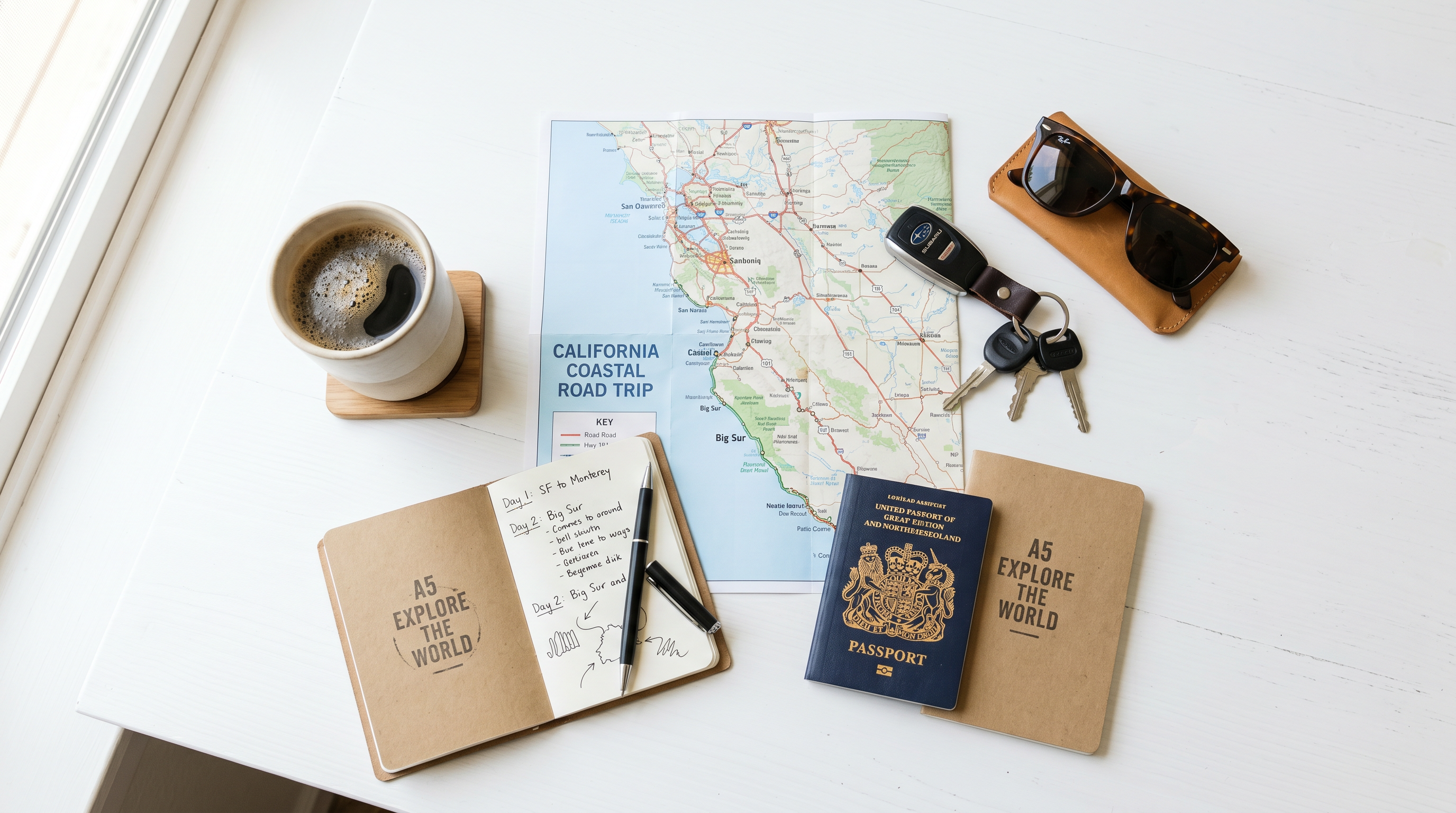
The drivers who struggle most in unfamiliar cities are the ones who open the navigation app after they've already left the parking lot. Do the preparation before pickup:
- Download offline maps. Google Maps and Apple Maps both allow offline area downloads. Do this at home on WiFi — not at a gas station 40 miles in.
- Review your first route before you start driving. Know the first few turns from memory so you're not reading a screen at a busy intersection.
- Check for known traffic issues. Look up the city's notorious bottlenecks — every city has them. Boston's Sumner Tunnel, the BQE in Brooklyn, Chicago's 290/90 interchange. Knowing they exist means you can route around them.
- Familiarize yourself with the car first. Mirrors, turn signals, headlights, horn. Know where everything is before you're on a freeway in the dark.
Navigation Tips
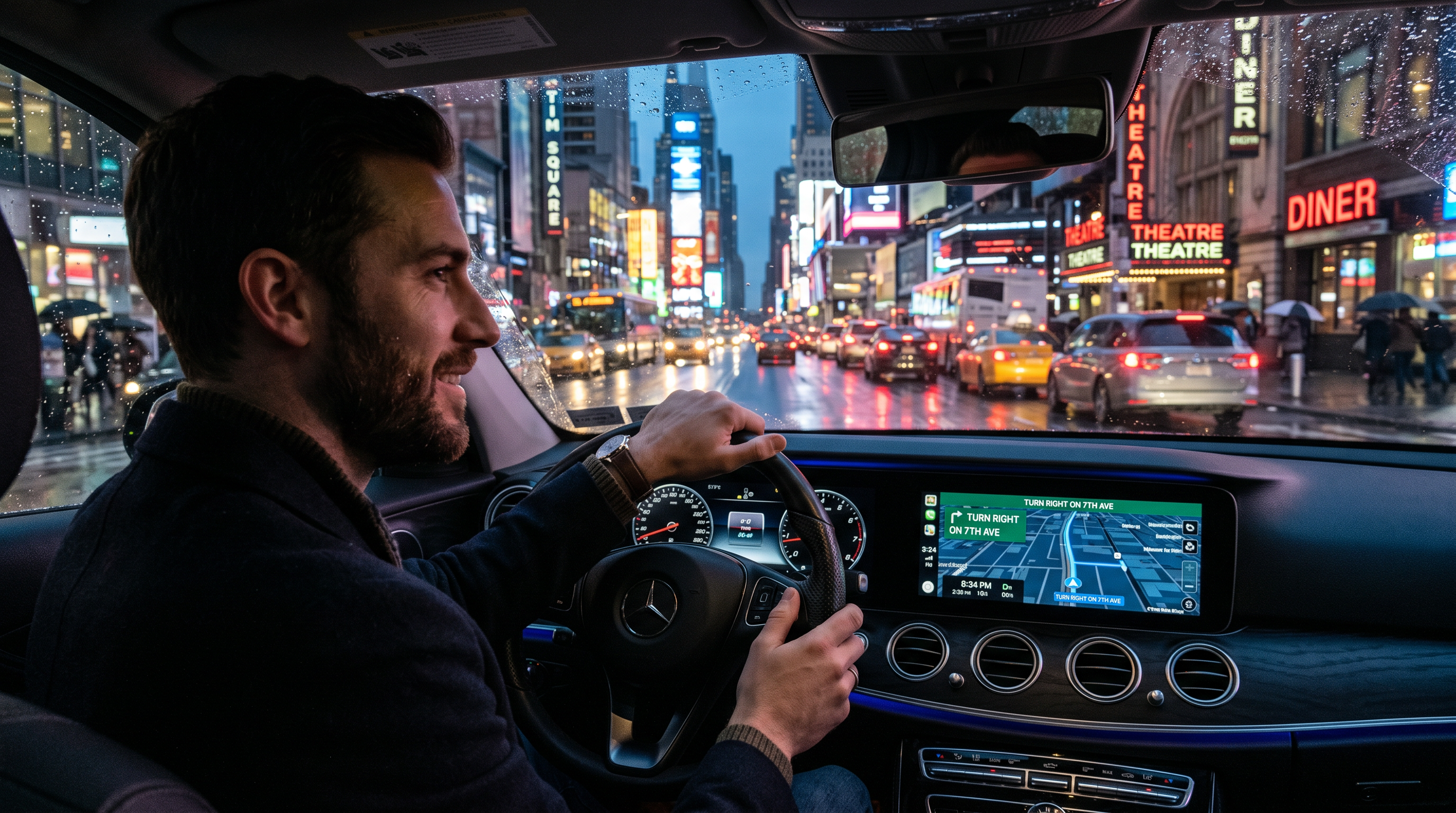
GPS has changed driving fundamentally, but it introduces its own failure modes:
- Let it recalculate. Many drivers ignore a re-route because "my way looks shorter on the map." Trust the app — it sees traffic you can't.
- Set the destination before moving. Never enter an address while driving. Pull over.
- Use Waze in high-traffic cities. Waze's real-time traffic intelligence is genuinely better than Apple Maps or Google Maps in dense urban environments.
- Announce turns early. When traveling with passengers, having someone read out turns 500 feet ahead eliminates last-second lane changes.
Parking Strategy
Parking in an unfamiliar city causes more rental damage than any driving does. Tight garages, ambiguous signage, and time pressure create mistakes. A few rules:
- Pre-book parking. SpotHero and ParkWhiz let you reserve spots in advance. It's almost always cheaper than drive-up, and you arrive knowing exactly where you're going.
- Read every sign before you walk away. Urban parking rules are complex — street cleaning times, permit zones, loading zones that become regular zones at 6pm. Read every sign on the block.
- Don't park in tight garages if you're not experienced. Rental car damage claims are dominated by parking structure incidents. Pay extra for an easier garage.
Know the Local Rules
Traffic laws vary meaningfully between cities and states:
- Right turn on red: Prohibited in all of New York City. Allowed (unless signed) everywhere else in the US.
- Speed cameras: Common in DC, Chicago, and NYC. They will mail a ticket to the rental company, which will charge your card plus an administrative fee.
- HOV lanes: Requirements vary — check whether your city enforces 2+ or 3+ occupancy, and during which hours.
- Tollways: Most modern tolls are cashless electronic. Your rental's EZ-Pass transponder works automatically — but confirm the fee structure before relying on it.