Route 66 has been declared dead before. The interstate killed it in 1985, then nostalgia resurrected it, then Instagram discovered it, and now it exists in a strange beautiful purgatory — half ruin, half revival, entirely worth driving. The Mother Road still has something no modern highway can replicate: a sense of the country as it was, moving at a pace the country forgot.
The Road Then & Now
Stretching 2,400 miles from Chicago's Lake Shore Drive to the Santa Monica Pier, Route 66 was built in 1926 as America's first continuous highway linking the Midwest to California. John Steinbeck called it "the Mother Road" in The Grapes of Wrath. Bobby Troup wrote a song about it. Millions drove it west chasing dreams during the Dust Bowl. By 1985, interstates had bypassed nearly every mile of it.
What's left today is better than you'd expect. Enthusiasts, historians, and local communities have spent decades restoring roadside Americana — neon-signed motels, wigwam-shaped cabins, rusted gas stations with hand-painted prices. The decommissioned highway is a living museum, and the towns along it are stubbornly, wonderfully alive.
Unmissable Highlights
Cadillac Ranch, Amarillo, TX
Ten Cadillacs buried nose-first in a Texas wheat field, spray-painted by visitors every day for 50 years. It sounds absurd. It's magnificent. Bring a can of spray paint.
Petrified Forest National Park, AZ
Ancient logs turned to crystal over 225 million years, scattered across painted desert badlands. The Blue Mesa trail is a 45-minute loop through landscape that looks like another planet.
Wigwam Motel, Holbrook, AZ
Sleep in a concrete teepee. The seven surviving Wigwam Motels are pure 1950s roadside kitsch — and they're genuinely fun. Book months ahead for summer dates.
Santa Monica Pier
The official end of Route 66. Walk to the end of the pier, put your hand on the sign, and feel the Pacific air. You've earned it.
Practical Logistics
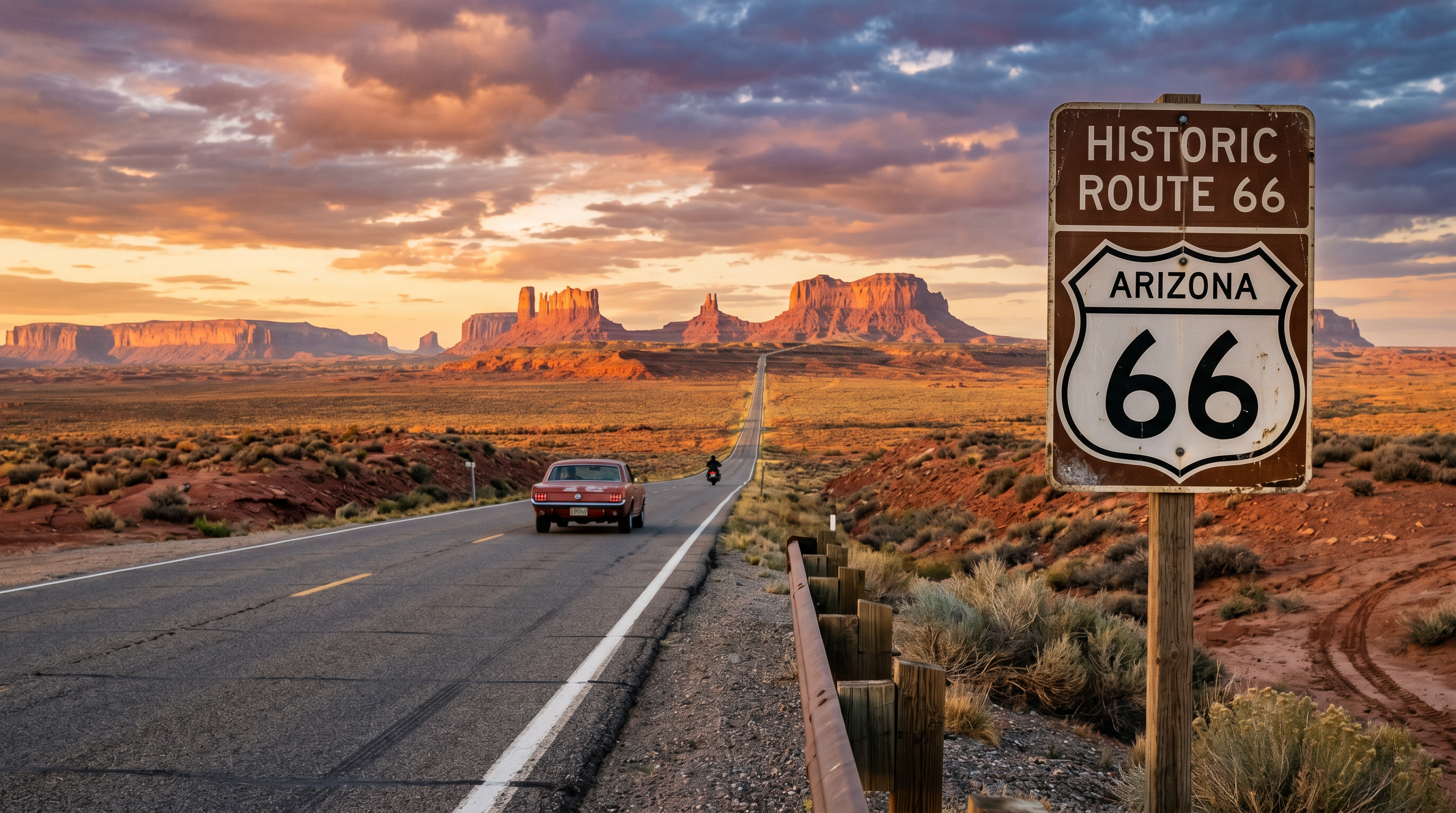
The honest truth: you cannot drive "true" Route 66 in a straight shot anymore. Much of the original alignment is unpaved, closed, or simply gone. The practical approach is to follow US-66 Historic Route signs where they exist, and accept that you'll use I-40 as a connective spine. The adventure is in the detours.
- Download the Route 66 app by the National Historic Route 66 Federation — it maps every surviving segment
- Book lodging well in advance for Albuquerque and Flagstaff — these fill up fast
- Carry cash; many iconic spots don't take cards
- Budget at least 10 days; 14 is better if you want to actually stop
Choosing Your Rental Vehicle
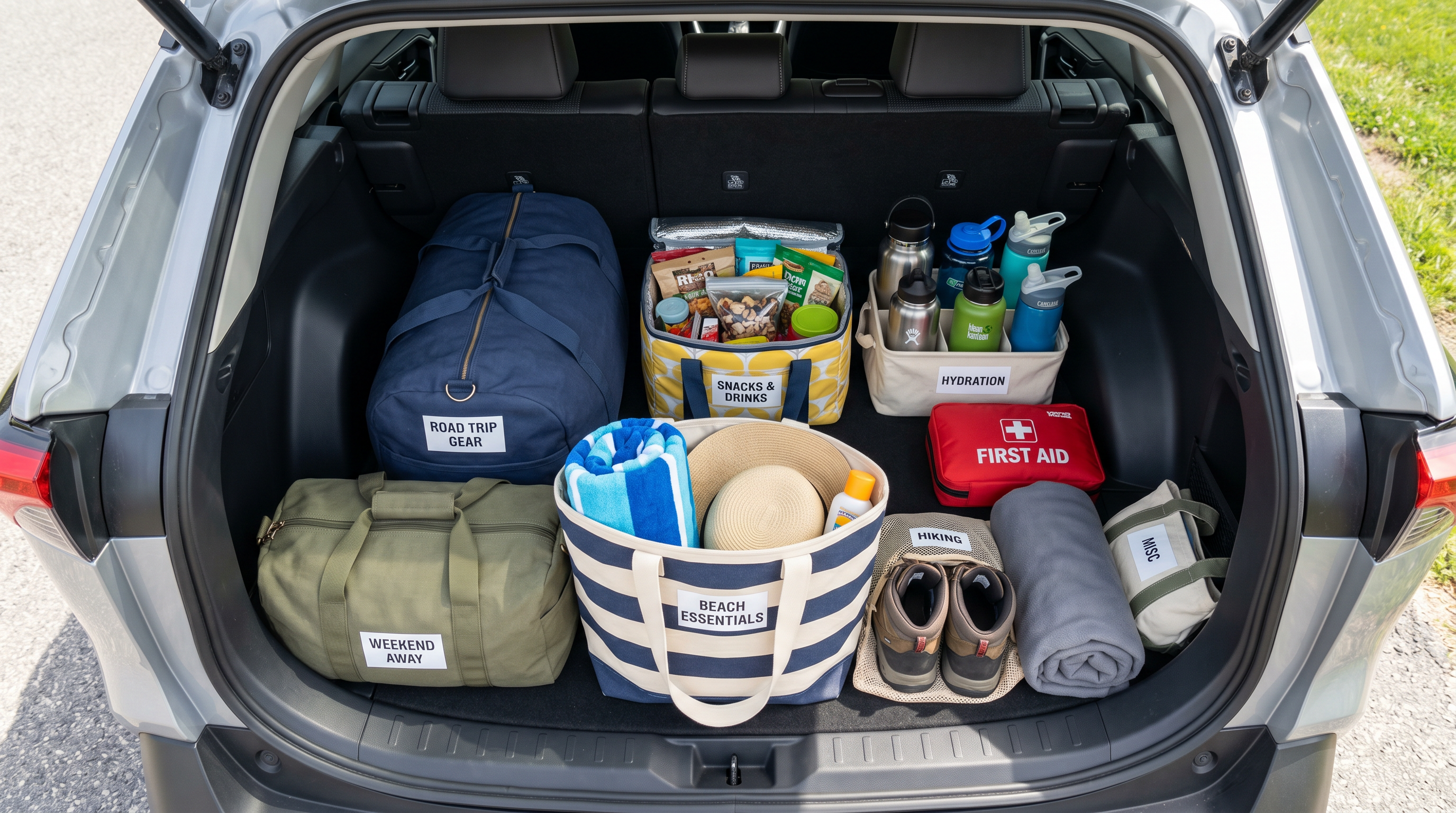
Midsize SUV — no question. You'll want the cargo room for gear, the ground clearance for unpaved segments in New Mexico and Arizona, and the comfort for long desert stretches. A convertible sounds romantic until mile 400 in the Texas heat. Get the SUV, bring sunscreen, and thank yourself in Albuquerque.